Revenue Lifecycle Management: Real-Time ERP Pricing That Closes Deals
The Client
An industrial manufacturer with 50,000+ products requiring real-time pricing from their ERP system during quote and order creation.
RLM Implementation Visualizations
Visual representations of the Revenue Lifecycle Management solution showing real-time pricing, product discovery flow, and customer-specific pricing capabilities.
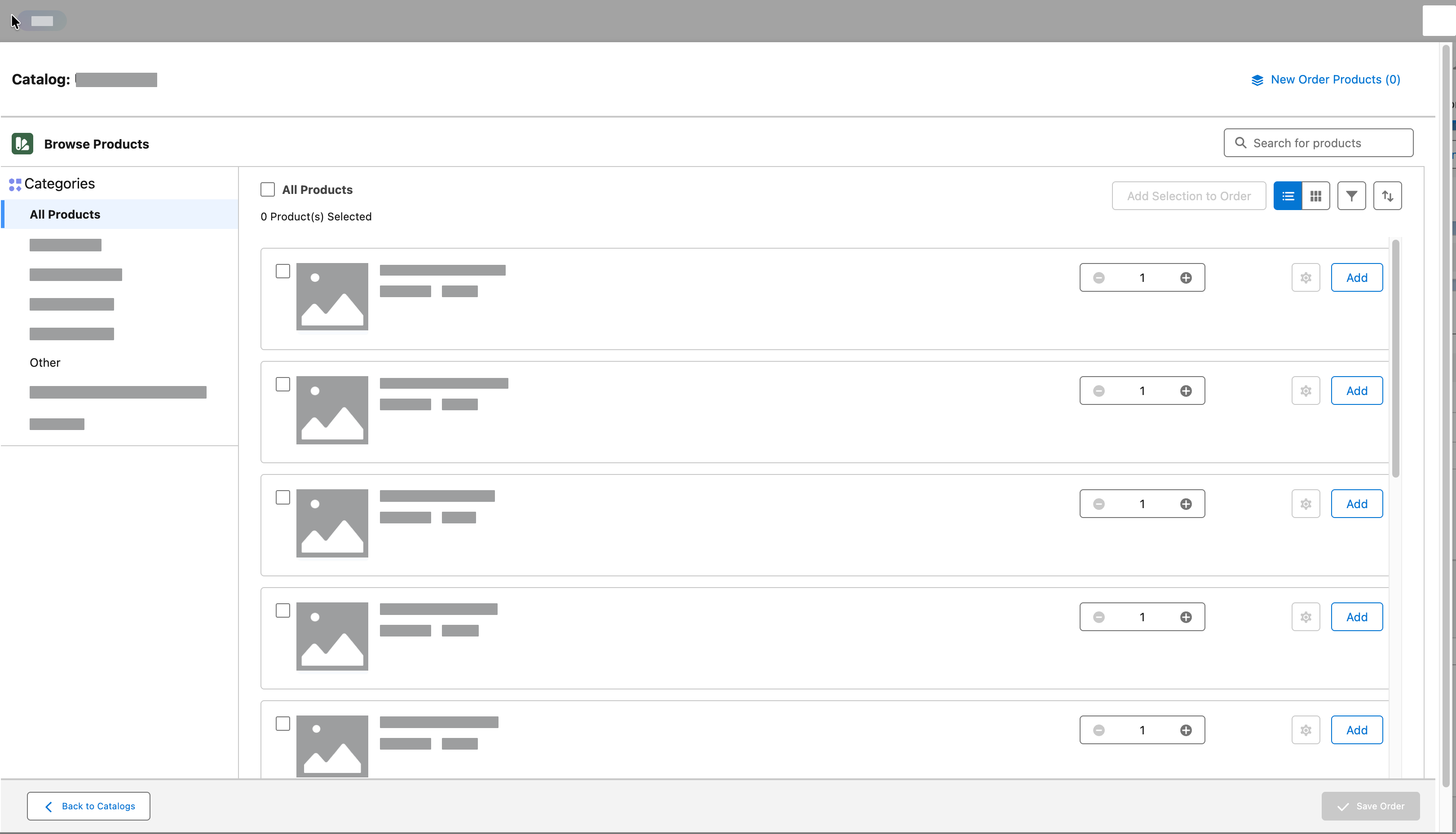
Add anonymized screenshot: Product Discovery Flow
Product Discovery Flow
Visual showing the product discovery and pricing flow from product selection to pricing display
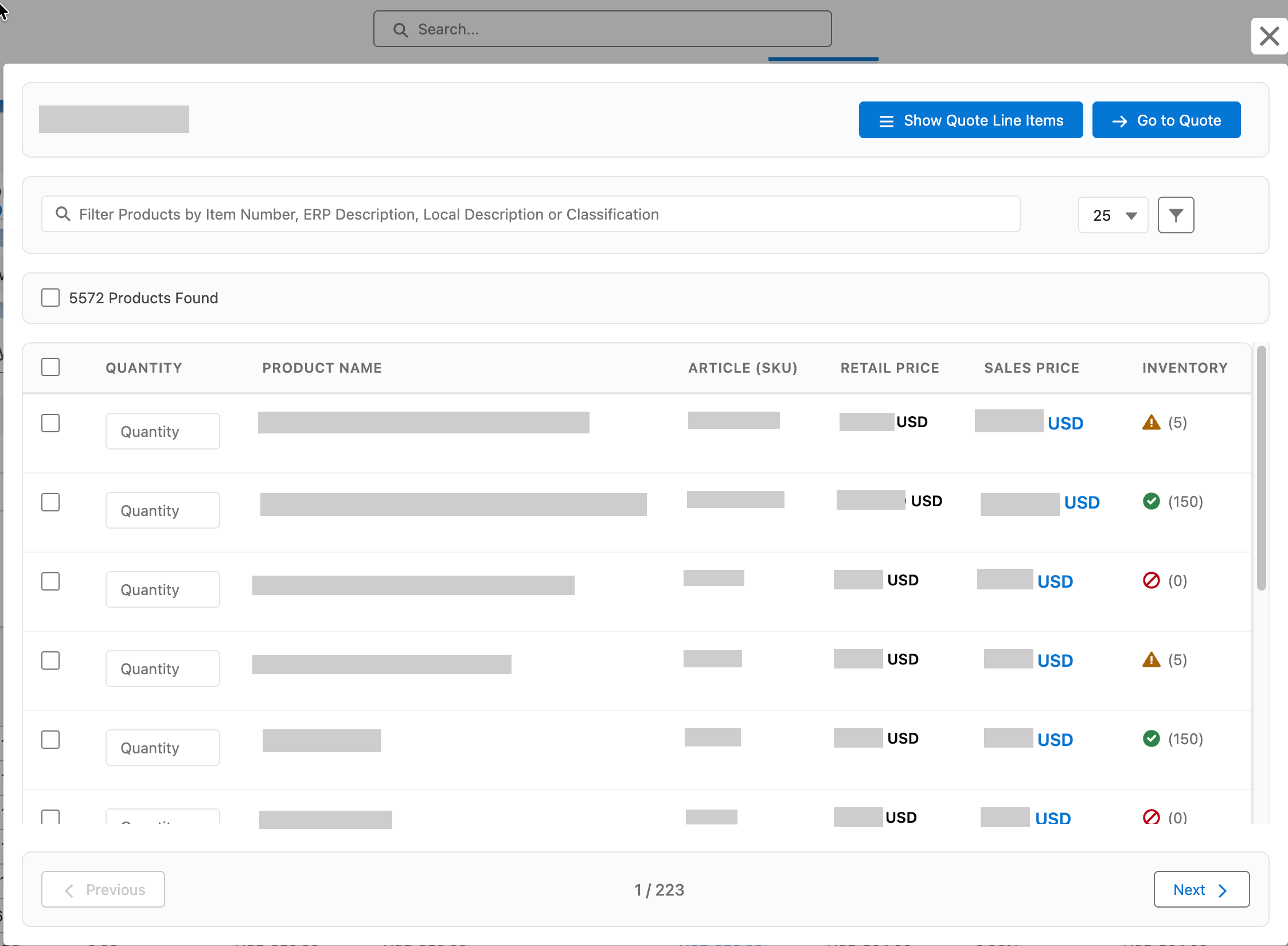
Add anonymized screenshot: Unified Transaction Management Component - Product Selection
Unified Transaction Management Component - Product Selection
Screenshot showing the unified component's product selection interface with advanced filtering, real-time search, and inventory status indicators (in-stock, low stock, out-of-stock)
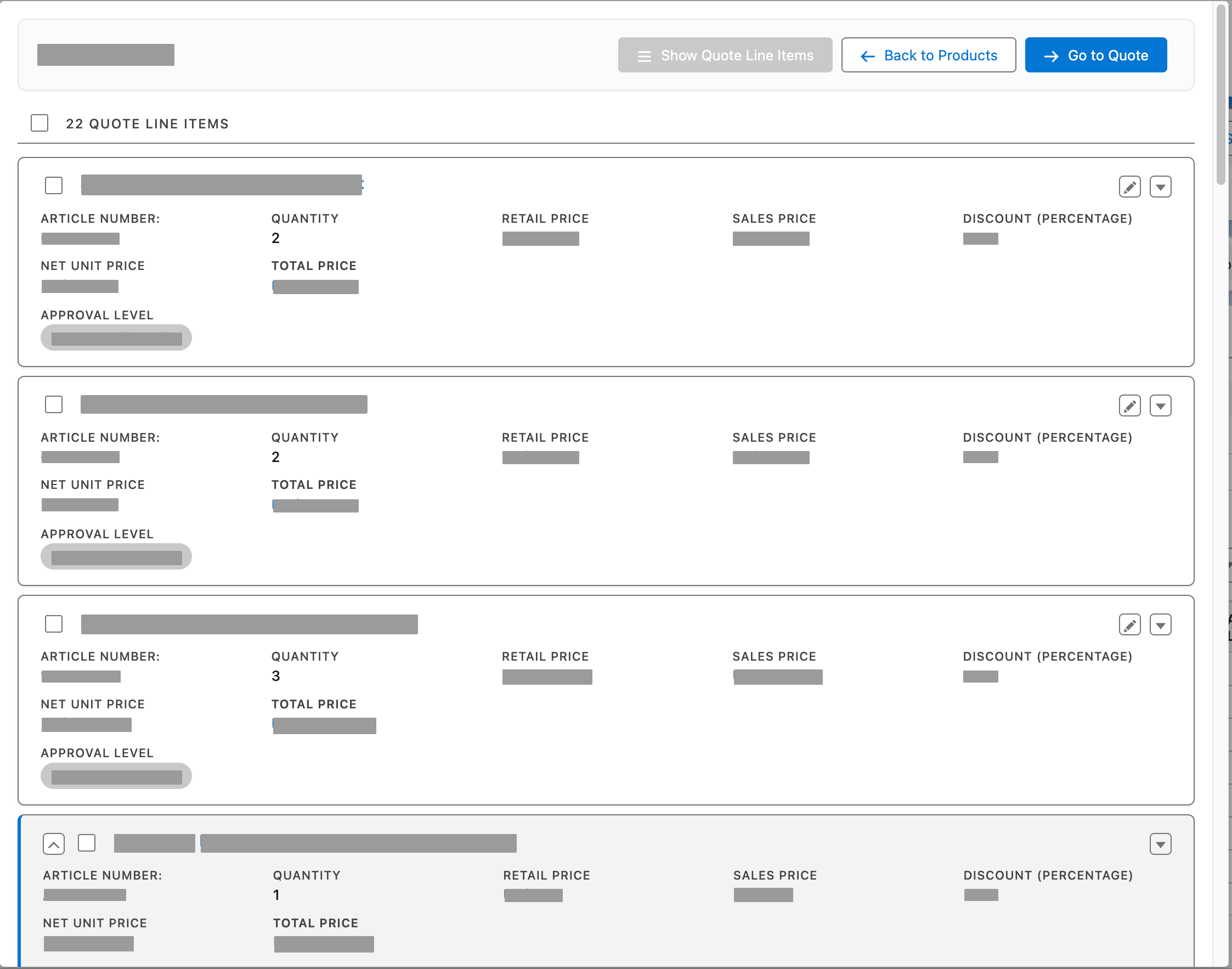
Add anonymized screenshot: Unified Transaction Management Component - Line Items
Unified Transaction Management Component - Line Items
Screenshot showing the unified component's line items management interface with discount management, approval calculations, and bundle configuration
The Challenge
Sales teams were losing deals during customer meetings—reps couldn't provide accurate quotes without manual ERP lookups. By the time they called customers back, competitors had already closed the deal. Pricing errors led to order rejections, costing 5% in annual revenue leakage.
The Problem in Numbers
Before RLM Implementation
- 30% of quotes contained pricing errors
- Quote generation: 2-3 days
- 1 in 5 deals lost due to delays
- 5% annual revenue leakage
Industry Statistics
- 88% of B2B manufacturers report lost deals from manual quoting
- 40% reduction in errors possible with automation
Our Solution
We implemented a Revenue Lifecycle Management solution that makes ERP pricing invisible to users. Sales teams can now provide accurate, customer-specific pricing in real-time during meetings—all happening seamlessly in the background. The solution leverages Salesforce Industries CPQ with prehook processing, intercepting transactions before commit to inject real-time ERP pricing and inventory data.
- 1 Prehook Processing Engine: Intercepts transactions before commit, enabling seamless ERP pricing injection—users see pricing appear instantly
- 2 Customer-Specific Pricing: Returns three pricing tiers (base, retail, customer-specific) enabling dynamic pricing strategies
- 3 Combined Pricing + Inventory: Single ERP callout returns both pricing and availability, preventing quotes for unavailable products
- 4 Smart Optimization: Prevents duplicate pricing calls (saves 40% API costs) and optimizes bulk processing
- 5 Unified Transaction Management Component: Single component dynamically handles all Orders and Quotes with intelligent transaction type detection
How It Works
The prehook processor intercepts transactions seamlessly, making ERP pricing completely invisible to users. Here's how the 8-step Product Discovery Flow works behind the scenes:
User Adds Products
Sales rep adds products to quote/order during customer meeting
Prehook Intercepts
Prehook processor intercepts transaction context before commit
Extract Product Data
System extracts product IDs and quantities from transaction
Map to ERP SKUs
Product2 IDs mapped to Article__c (SKU) codes for ERP compatibility
Single ERP Callout
Combined pricing + inventory callout handles all products at once
Receive Pricing Data
ERP returns basePrice, retailPrice, and customerPrice for each product
Update Transaction
Pricing attributes updated seamlessly via tag-based architecture
User Sees Result
Accurate pricing appears instantly—user never knows ERP callout happened
Key Differentiators
What makes this solution special—the features that set it apart from traditional CPQ-ERP integrations:
Invisible Integration
ERP pricing appears automatically—users don't know a callout is happening
Customer-Specific Pricing
Three pricing tiers: base, retail, and customer-specific
Real-Time Inventory
Combined pricing + availability in single callout
Unified Transaction Management
Single component handles all Orders and Quotes dynamically
Before & After
Before RLM
Old ProcessSales rep in meeting → Can't provide quote → Must call office → Wait for ERP lookup → Often wrong price → Deal lost
Metrics:
- Quote generation: 2-3 days
- 30% error rate
- 5% revenue leakage
After RLM
New ProcessSales rep in meeting → Adds products → Pricing appears instantly → Accurate customer-specific pricing → Deal closed
Metrics:
- Quote generation: Minutes
- 98% accuracy
- Zero pricing-related rejections
The Results
"The breakthrough was making ERP pricing invisible to users. Sales reps can now provide accurate, customer-specific pricing during meetings without knowing an ERP callout is happening. This eliminated pricing delays, reduced errors by 40%, and recovered 5% in annual revenue."
Lessons Learned
- Smart filtering prevented 40% of unnecessary ERP calls, reducing API costs and improving performance
- Customer-specific pricing became the key differentiator—enabling dynamic pricing strategies competitors couldn't match
- Unified component architecture reduced maintenance overhead by 60% while ensuring consistent user experience
- Combined pricing + inventory in single callout eliminated order rejections and improved customer satisfaction